


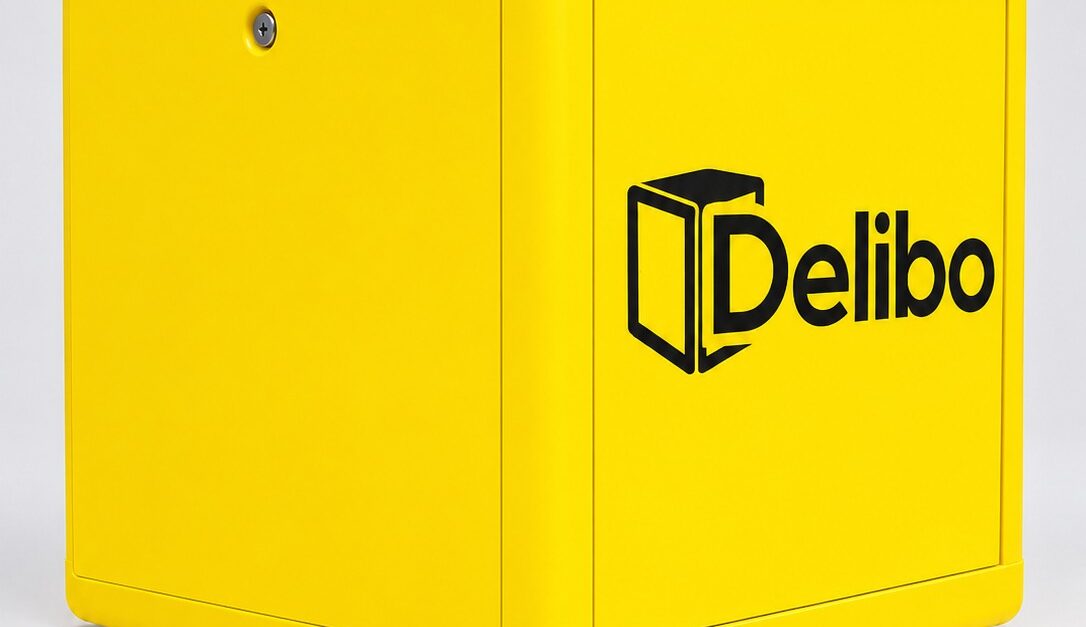
The delivery industry is evolving faster than ever. From food delivery platforms and restaurant chains to courier companies and large fleet operators, businesses are continually looking for practical ways to improve their delivery operations. As demand grows, the equipment used every day by delivery riders is also receiving greater attention.
One important development is the use of plastic injection moulding in motorcycle delivery box manufacturing. By combining purpose-designed moulds with controlled production processes, this manufacturing method offers new opportunities for consistent product design, scalable production, and functional innovation.
At DELIBO, we believe that rethinking how delivery boxes are designed and manufactured is an important step towards meeting the changing requirements of modern delivery businesses.
What Is Plastic Injection Moulding?
Plastic injection moulding is a manufacturing process in which plastic material is heated until it can flow, then injected into a specially designed mould. After cooling and solidifying, the material takes the shape of the mould and is removed as a finished component.
This process is widely used to manufacture plastic products across automotive, consumer goods, packaging, and industrial applications.
For delivery box manufacturers, injection moulding provides an alternative to construction methods that may involve fibreglass layering, fabrication, or the assembly of multiple components. The suitability of moulding depends on the product design, selected material, production volume, and intended operating conditions.
1. Consistent Design Across Every Production Batch
For delivery businesses operating large fleets, consistency is an important consideration. When dozens or hundreds of motorcycles are equipped with delivery boxes, matching dimensions, appearance, and component fit can help simplify fleet management.
Injection moulding uses a defined mould to shape components repeatedly. With appropriate tooling, process controls, and quality inspections, manufacturers can achieve consistent product dimensions across production batches.
This can be particularly useful for businesses that plan to expand their fleets, reorder the same model, or maintain a uniform appearance across different operating locations.
2. Greater Opportunities for Innovative Design
A delivery box must accommodate practical requirements while fitting the intended motorcycle or scooter.
Injection moulding gives designers the opportunity to develop specific shapes, contours, and selected integrated features within the limits of the moulding process. Depending on the design, some details may be incorporated directly into the moulded component rather than manufactured separately.
Product developers can explore features relating to lid access, exterior styling, component placement, and storage arrangements.
The result is greater flexibility in how a product can be developed, although every design must still meet the relevant structural, functional, and vehicle compatibility requirements.
3. Manufacturing That Can Support Business Growth
A small business purchasing five delivery boxes has different requirements from a delivery platform planning to equip 500 or 1,000 riders.
Injection moulding can be suitable for larger production runs because the same tooling can be used to manufacture repeated components. However, the initial cost of mould development and tooling can be substantial, making production volume an important factor in determining commercial suitability.
For manufacturers serving fleet operators and distributors, planning around expected demand can help establish an appropriate production strategy.
Businesses considering bulk orders should discuss minimum order quantities, production lead times, product availability, and future replenishment requirements before confirming a purchase.
4. A Modern and Professional Appearance
Delivery boxes are highly visible on roads, outside restaurants, and within residential communities. Their appearance can contribute to the overall presentation of a delivery fleet.
Moulded plastic designs can provide consistent exterior shapes and clean surface finishes, depending on the mould, material, and finishing process.
For businesses with established brand identities, suitable colours and approved logo applications can also help create a coordinated appearance across their delivery vehicles.
Customisation options vary by manufacturer and product design, so fleet buyers should confirm available colours, branding methods, and order requirements before placing a bulk order.
5. New Possibilities for Material and Product Development
The selection of plastic material influences the finished product’s characteristics. Different materials offer different combinations of stiffness, impact performance, weight, weathering resistance, and processing requirements.
Injection moulding allows manufacturers to evaluate suitable materials according to the product’s intended use.
For motorcycle delivery boxes, material selection should consider everyday handling, expected environmental exposure, mounting requirements, and the loads the box is designed to carry.
Importantly, injection moulding alone does not guarantee superior strength, lighter weight, insulation, or longer service life. These characteristics depend on the chosen material, component design, manufacturing quality, and appropriate testing.
6. Opportunities to Improve Production Efficiency
Traditional fabrication methods and injection moulding involve different production workflows.
Depending on the product, injection moulding may reduce the need for certain repetitive fabrication or assembly steps. Once tooling and production processes are established, manufacturers can plan repeat production around a more standardised workflow.
However, overall efficiency depends on several factors, including cycle time, material usage, tooling maintenance, quality-control requirements, and the complexity of the finished product.
For businesses evaluating delivery box suppliers, understanding the manufacturing process can provide useful context when comparing product specifications, pricing, and expected lead times.
Traditional Construction vs. Injection-Moulded Delivery Boxes
Both approaches can be suitable for commercial applications. The right choice depends on the buyer’s requirements and the product’s verified specifications.